
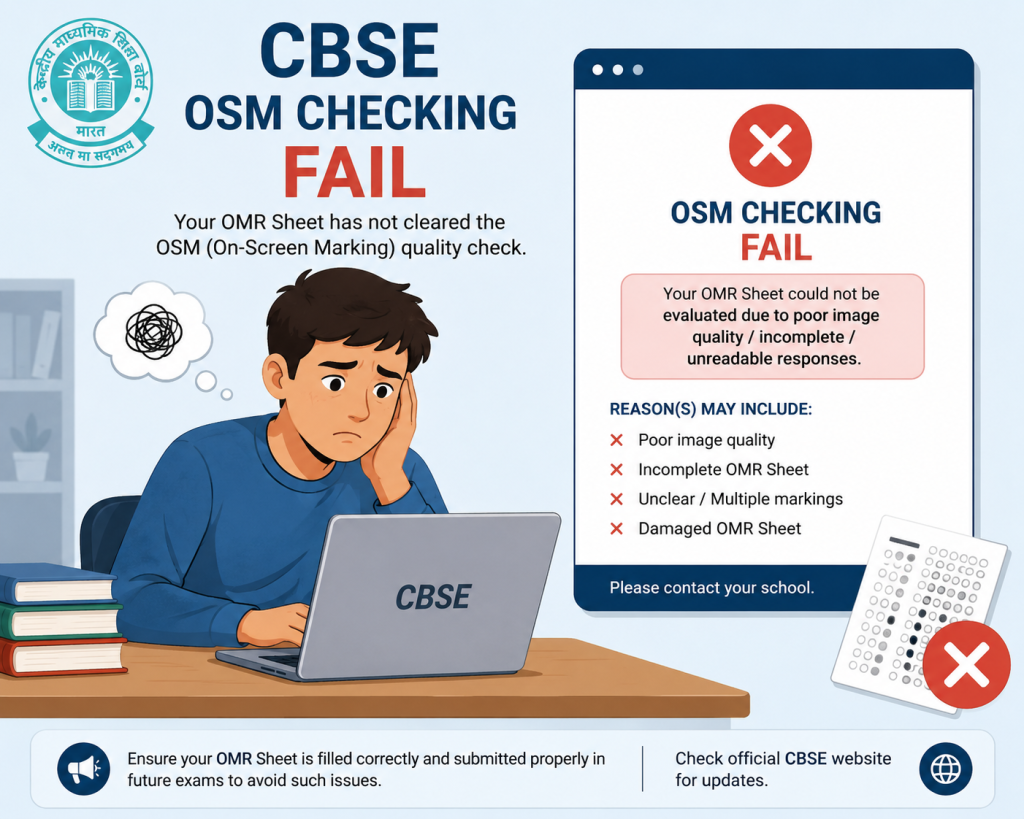
CBSE OSM Failure Exposed: Education System in Crisis
The declaration of board examination results is one of the most important moments in a student’s academic journey. However, recent concerns surrounding the CBSE On-Screen Marking (OSM) system have sparked debates across India. Students, parents, and educators have questioned the accuracy of evaluations, bringing attention to a larger issue—the crisis in our education system.
The CBSE OSM Failure Exposed: Education System in Crisis discussion is not just about marks. It is about fairness, transparency, student mental health, and trust in the education system. As more students report discrepancies in their results, the need for educational reforms has become increasingly urgent.
What is the CBSE OSM System?
CBSE introduced the On-Screen Marking (OSM) system to modernize the evaluation process. Under this system, answer sheets are scanned and evaluated digitally by trained examiners.
The objectives of OSM include:
Faster result processing
Reduced paperwork
Improved transparency
Better monitoring of evaluators
While the system offers several benefits, critics argue that implementation challenges can lead to errors that affect students’ academic futures.
Why Are Students Raising Concerns?
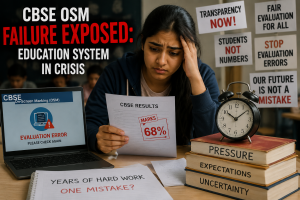
Many students have reported receiving marks that were significantly lower than expected. In some cases, marks increased after re-evaluation, leading students to question the reliability of the original assessment.
Common concerns include:
Unchecked answers
Incorrect totaling of marks
Evaluation inconsistencies
Technical glitches in digital assessment
Lack of transparency in the checking process
These issues have fueled public discussions about whether technology alone can ensure fair evaluation. Due to which the CBSE OSM system had been failed to deliver the clear and neat result to the students . Which create wild anger among the students which led to a digtal protest among the stundents agianst the CBSE.
Reasons Behind CBSE OSM Failures
1. Heavy Workload on Evaluators
Examiners often evaluate hundreds of answer sheets within strict deadlines. Such pressure can increase the likelihood of mistakes.
2. Technical Challenges
Digital systems are not immune to problems. Scanning errors, software issues, and poor image quality may impact the evaluation process.
3. Inadequate Training
Not all evaluators possess the same level of expertise in digital assessment tools. Insufficient training can contribute to inconsistent marking.
4. Human Error
Even the most advanced systems rely on human judgment. Errors such as skipped answers or incorrect calculations can occur.
5. Speed Over Accuracy
Education boards face pressure to release results quickly. Sometimes speed can unintentionally compromise thorough evaluation.
The Growing Crisis in Our Education System
The controversy surrounding CBSE OSM highlights broader challenges within the education sector.
Some major issues include:
Excessive focus on marks
Limited emphasis on practical learning
High academic pressure
Inadequate student counseling
Dependence on examination-based success
The crisis in our education system extends beyond evaluation mistakes. It reflects the need for a more student-centered approach that values learning as much as scoring.
Impact of Evaluation Errors on Students
Mental Health Challenges
Unexpected results can cause stress, anxiety, and disappointment among students who have worked hard throughout the year.
Reduced Confidence
When students believe their efforts have not been fairly assessed, their confidence and motivation can suffer.
College Admission Problems
Board exam scores often influence admission opportunities. Evaluation errors may affect access to preferred colleges and courses.
Financial Burden

Families may spend additional money on re-evaluation applications and related processes.
Public Outrage After the Results
Following the release of results, social media platforms witnessed widespread discussions and criticism.
Students and parents:
Shared concerns online
Demanded greater transparency
Requested answer-sheet reviews
Called for educational reforms
The growing public reaction demonstrated the importance of maintaining trust in examination systems
Solutions to Improve the CBSE OSM System

To restore confidence, several improvements can be considered.
Strengthen Examiner Training
Regular training programs can help evaluators use digital tools more effectively.
Introduce Double Verification
A second-level review process can reduce the chances of unchecked answers and totaling errors.
Use AI-Assisted Quality Checks
Artificial intelligence can help identify missing marks and potential inconsistencies.
Improve Transparency
Students should have easier access to evaluated answer sheets and re-evaluation procedures.
Frequently Asked Questions (FAQs)
What is CBSE OSM?
CBSE OSM stands for On-Screen Marking, a digital system used to evaluate scanned answer sheets.
Can mistakes occur in digital evaluation?
Yes. Human errors, technical issues, and evaluation inconsistencies can occur even in digital systems.
Why do marks sometimes increase after re-evaluation?
Marks may increase if unchecked answers, totaling errors, or evaluation mistakes are discovered during review.
How can students challenge their results?
Students can apply for verification, obtain answer-sheet copies, and request re-evaluation through official procedures.
Why is this considered a crisis in our education system?
The controversy highlights concerns about transparency, student stress, accountability, and excessive dependence on examination scores.
Conclusion
The debate surrounding CBSE OSM Failure Exposed: Education System in Crisis is a reminder that education is about more than just marks. While technology can improve efficiency, fairness and accuracy must remain the top priorities. Strengthening evaluation processes, improving transparency, and focusing on student well-being can help rebuild trust in the system. follow us for more amazing content and for current affairs.