
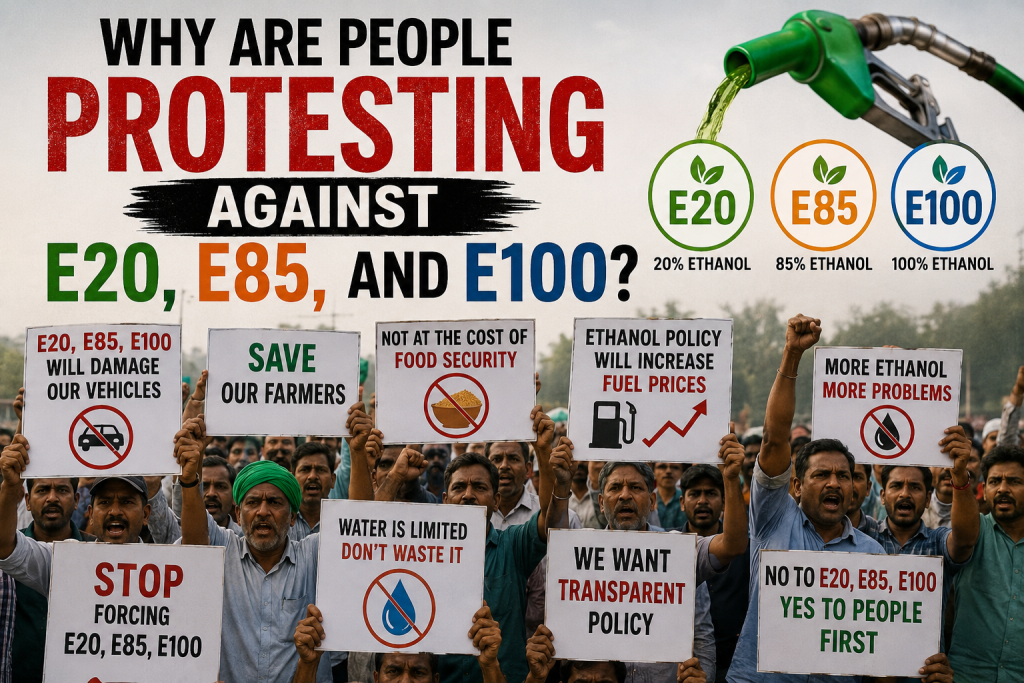
Why Are People Protesting Against E20, E85, and E100?
The E20, E85 and E100 protest has gotten the public’s attention in many areas. Different concerns have been raised by citizens, farmers, environmental groups and vehicle owners. Governments are promoting ethanol-blended fuels to ease crude oil imports and reduce emissions, but many are sceptical of its long-term effects. The protest against E20, E85 and E100 is about the compatibility of vehicles, farming practices, fuel efficiency and economic costs.
What Are E20, E85, and E100?
E20 is 20% ethanol and 80% petrol.
E85 is 85% ethanol and 15% petrol.
E100 is almost pure ethanol.
Governments encourage the use of these fuels to reduce dependence on imported crude oil. Officials also expect ethanol blending to improve energy security and reduce greenhouse gas emissions.
Why Are People Protesting Against E20, E85, and E100?
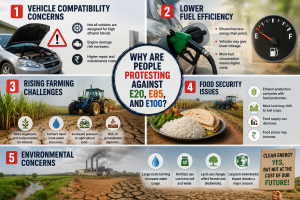
1. Vehicle Compatibility Concerns
Many vehicles currently on the road were not designed for high ethanol blends.
Owners worry about engine damage.
Drivers fear expensive repairs.
Mechanics expect maintenance costs to increase.
These concerns have strengthened the E20, E85, and E100 protests among vehicle owners.
2. Lower Fuel Efficiency
Ethanol contains less energy than petrol.
Many drivers believe vehicles may travel fewer kilometres per litre.
Higher fuel consumption may increase transportation costs.
The E20, E85, and E100 protest continues because many consumers worry about overall fuel expenses.
3. Rising Farming Challenges
The government needs more sugarcane and maize to produce ethanol. Farmers use additional water to grow these crops. Experts warn that expanding ethanol production puts greater pressure on agricultural land. Environmental groups highlight the risk of groundwater depletion. These concerns continue to drive the E20, E85, and E100 protests.
4. Food Security Issues
Many critics argue that large-scale ethanol production competes with food production. Farmers may allocate more land to fuel crops instead of food crops. This shift could reduce food supplies and increase food prices. These concerns keep the E20, E85, and E100 protests in the public spotlight
5. Environmental Concerns
Supporters promote ethanol as a cleaner fuel. Critics argue that large-scale ethanol farming increases water consumption. Researchers also point to fertiliser use and land-use changes as environmental challenges. Environmental organisations continue to examine these issues during the E20, E85, and E100 protests.
Government’s Stand
The government promotes ethanol blending to reduce crude oil imports. Officials aim to strengthen India’s energy security. Authorities encourage domestic biofuel production and investment. The government believes ethanol production creates rural jobs and helps reduce carbon emissions.
Benefits Supporters Highlight
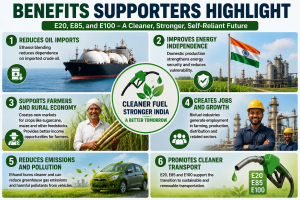
Supporters believe ethanol reduces India’s dependence on imported oil. Domestic ethanol production strengthens energy independence. Farmers can earn additional income by supplying ethanol crops. Biofuel industries create new employment opportunities. Cleaner ethanol combustion can reduce certain tailpipe emissions. Supporters view these benefits as important despite the E20, E85, and E100 protests.
Challenges Ahead
Vehicle manufacturers must improve engine compatibility with higher ethanol blends. Governments must protect farmers while promoting biofuel production. Authorities should manage water resources responsibly. Scientists must continue independent research on ethanol’s long-term impacts. Consumers deserve transparent information before adopting new fuels. Balanced policies can address concerns behind the E20, E85, and E100 protests.
Conclusion
The E20, E85, and E100 protest reflects public concerns about India’s transition to ethanol-blended fuels. The government aims to reduce fuel imports, strengthen energy security, and promote cleaner energy. Citizens expect affordable fuel, reliable vehicles, sustainable farming, and transparent scientific evidence. Policymakers, researchers, farmers, manufacturers, and consumers must work together to ensure ethanol blending benefits the country while minimising economic and environmental risks.
Frequently Asked Questions (FAQs)
Why are people protesting against E20, E85, and E100?
People protest because they worry about vehicle compatibility, repair costs, fuel efficiency, farming challenges, water consumption, environmental impacts, and food security.
What is E20 fuel?
E20 fuel contains 20% ethanol and 80% petrol.
What is E85 fuel?
E85 fuel contains 85% ethanol and works mainly in flex-fuel vehicles.
What is E100 fuel?
E100 fuel contains nearly pure ethanol and requires specially designed engines.
Does ethanol reduce pollution?
Ethanol can reduce certain vehicle emissions. However, its overall environmental impact depends on farming practices, land use, water consumption, and production methods.
Are all vehicles compatible with E20, E85, or E100?
No. Vehicle compatibility depends on the manufacturer’s specifications and the engine’s design.
https://shorturl.fm/RSNDx