
Punjab Pharmacy Officer Paper Cheating on 19 July
The Punjab Pharmacy Officer paper-cheating controversy became one of the most discussed recruitment issues after the examination was conducted on 19 July. Thousands of candidates appeared for the exam with the hope of securing a government job through merit and hard work. Soon after the examination, several candidates raised concerns about possible irregularities. They approached the authorities and later sought legal intervention.
The Punjab Pharmacy Officer paper-cheating issue attracted widespread public attention because government recruitment examinations must remain transparent and fair. Every deserving candidate expects an equal opportunity to compete without facing unfair practices.
What Did the Court Observe?
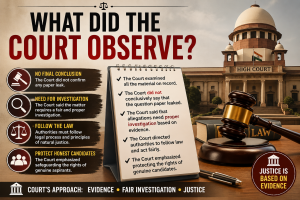
The Punjab Pharmacy Officer paper-cheating matter reached the High Court after candidates challenged the examination process. During the proceedings, the Court examined the available material and heard the arguments from all concerned parties.
Based on the information available through court proceedings, the Court did not conclusively declare that the question paper had leaked before the examination. Instead, the Court emphasised that the allegations required proper examination based on evidence. The Court expected the authorities to investigate the complaints fairly and follow the law while protecting the rights of genuine candidates.
The Court’s approach highlights an important legal principle. Courts decide cases based on verified evidence rather than public opinion or social media claims. This principle protects both innocent candidates and the integrity of the justice system
Why a Fair Investigation Is Necessary
The Punjab Pharmacy Officer paper-cheating controversy demonstrates why every recruitment examination requires an independent and transparent investigation whenever serious complaints arise.
A fair investigation can:
- Identify whether any examination rules were violated.
- Protect honest candidates from injustice.
- Restore public confidence in the recruitment process.
- Hold guilty individuals accountable if wrongdoing is proven.
- Prevent similar controversies in future examinations.
Authorities should complete investigations without unnecessary delay. They should also publish their findings transparently so that candidates understand how the issue was resolved.
Impact on Honest Candidates

The Punjab Pharmacy Officer paper-cheating controversy created uncertainty among thousands of genuine aspirants. Many candidates spent months preparing for the examination. They attended coaching classes, revised pharmacy subjects, and sacrificed personal time to compete fairly.
When allegations of cheating arise, honest candidates often experience the following:
- Emotional stress.
- Loss of confidence.
- Anxiety about recruitment.
- Financial pressure due to repeated preparation.
- Uncertainty regarding career opportunities.
Even when allegations remain under investigation, the controversy itself can reduce public trust in recruitment systems.
Why Paper Cheating Misguides Youth
The Punjab Pharmacy Officer’s paper-cheating discussion also raises a broader social concern. Examination cheating sends the wrong message to young people.
Cheating creates the false impression that success comes through shortcuts instead of knowledge, discipline, and perseverance. Students who believe this message may gradually lose confidence in honest preparation.
Paper cheating misguides youth because it:
- Reduces respect for education.
- Weakens moral values.
- Encourages unethical behaviour.
- Damages self-confidence.
- Promotes corruption.
- Discourages hard-working students.
- Harms the credibility of public institutions.
Young people should understand that cheating may offer temporary gains, but it often leads to long-term personal and professional consequences.
How Authorities Can Strengthen Examination Security
The Punjab Pharmacy Officer paper-cheating controversy shows that recruitment agencies should continuously improve examination security.
Authorities can strengthen the process by:
- Using encrypted digital systems for question paper management.
- Conducting biometric verification of candidates.
- Installing CCTV cameras in every examination centre.
- Monitoring examination centres through live surveillance.
- Restricting unauthorised electronic devices.
- Performing surprise inspections.
- Taking strict legal action against proven offenders.
- Publishing investigation reports to improve transparency.
These measures can increase public confidence and reduce opportunities for malpractice.
Responsibilities of Students
Students also play an important role in protecting the integrity of competitive examinations.
Every candidate should:
- Prepare honestly.
- Reject unfair practices.
- Report suspicious activities.
- Follow examination rules.
- Respect ethical values.
- Support merit-based recruitment.
Success achieved through hard work builds confidence, professional skills, and long-term career growth.
Public Trust Depends on Transparency

Government recruitment systems work effectively only when candidates trust the examination process. Every allegation deserves careful examination, but every conclusion must also rely on verified evidence.
The Punjab Pharmacy Officer paper-cheating controversy reminds authorities that transparency, accountability, and timely investigations are essential for maintaining public confidence. At the same time, society should avoid spreading unverified claims before official findings become available.
Conclusion
The Punjab Pharmacy Officer paper-cheating controversy has become an important reminder that fair recruitment depends on transparency, accountability, and evidence-based decision-making. The court has emphasised the importance of examining complaints through proper legal procedures instead of assumptions. A fair investigation protects honest candidates, strengthens public trust, and ensures that justice serves everyone equally. Young people should reject shortcuts and continue believing in hard work, integrity, and merit because these values create lasting success.
Frequently Asked Questions (FAQs)
1. What is the Punjab Pharmacy Officer paper cheating controversy?
The controversy relates to complaints about alleged irregularities during the Punjab Pharmacy Officer recruitment examination held on 19 July. The matter reached the High Court for judicial review.
2. Did the High Court confirm that the question paper leaked?
Based on court proceedings, the High Court did not conclusively declare that the question paper had leaked. It stressed the importance of examining the available evidence through a fair legal process.
3. Why is a fair investigation important?
A fair investigation protects honest candidates, identifies any actual wrongdoing, ensures accountability, and strengthens confidence in the recruitment system.
4. How does paper cheating affect youth?
Paper cheating encourages shortcuts, weakens ethical values, reduces trust in education, and discourages students who prepare honestly.
5. What can authorities do to prevent future examination controversies?
Authorities can improve security through encrypted question paper systems, biometric verification, CCTV monitoring, strict supervision, and prompt legal action against anyone found guilty of examination malpractice.